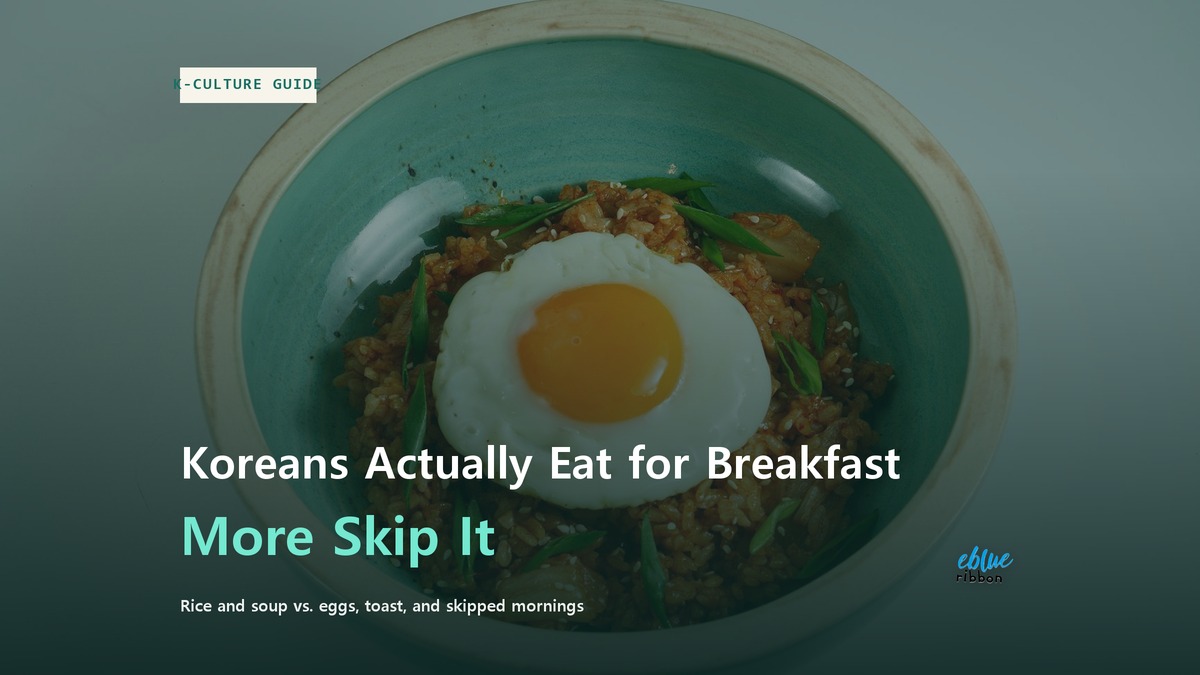

What do Koreans actually eat for breakfast? Not the rice-soup-and-six-banchan spread K-dramas keep putting on screen. Government health data from 2024 shows 35.3 percent of Koreans skip breakfast regularly, and when people do sit down to eat, the average plate has just two dishes on it — most often eggs, rice, or bread, not a full traditional table.
What K-Dramas Get Right (and Wrong) About Korean Breakfast
The scene is familiar to anyone who watches K-dramas: a mother or grandmother sets down rice, a bubbling stew, and four or five small side dishes before the family sits together. That format is real — it’s called a han-sang, one full table setting eaten together. But it’s closer to a special occasion in most 2026 households than a Tuesday morning routine.
Where the Rice-and-Soup Image Comes From
The traditional structure — rice, a soup or stew, and three to five banchan — is still the standard at family gatherings and holidays, when extended family cooks together the night before. Korean Thanksgiving Chuseok Explained: Why the Name Is Misleading covers one of the few times this full spread still appears on a weekday table. For the millions of Koreans commuting early or living alone, that structure just doesn’t fit a normal morning.
How Many Koreans Skip Breakfast Entirely
According to the Korea National Health and Nutrition Examination Survey (KNHANES), run by the Korea Disease Control and Prevention Agency, 35.3 percent of Koreans aged one and older did not eat breakfast regularly in 2024 — up from 26.2 percent in 2015, a steady climb almost every year for a decade. The gap widens sharply by age: 62.1 percent of people in their 20s skip breakfast, and among women in that age group the figure rises to 67.5 percent, the highest of any group the survey tracks.
Why the Number Keeps Climbing
The rise coincides with longer commutes into Seoul, early class and shift-start times, and a morning routine built around coffee rather than a meal. Korean Cafe Culture Explained: Why Study Cafes Exist gets into why there’s a café on nearly every block — for a lot of Koreans, that coffee stop has effectively replaced sitting down to eat before heading out.
What Koreans Actually Eat for Breakfast, By the Numbers
A Kellogg-backed survey of 1,659 photographed breakfasts found Korean morning meals center on simple menus rather than elaborate spreads — an average of 2.6 menu items served across just two dishes, with 76 percent of those meals eaten at home. Eggs led the list at 29.4 percent of meals, followed by rice at 24.4 percent and bread at 23.1 percent, putting a Western-style item almost on par with rice.

| Breakfast Style | What’s On the Table | How Common Today |
|---|---|---|
| Traditional han-sang | Rice, soup or stew, 3-5 banchan | Gatherings, holidays, some family households |
| Simple modern breakfast | Eggs, rice, or bread — usually 2 dishes | Most Koreans who eat breakfast at all |
| No breakfast | Coffee only, or nothing | 35.3% overall, 62.1% of people in their 20s |
Convenience Store and Café Mornings
For the roughly one in four breakfasts eaten outside the home, convenience stores fill a lot of that gap — triangle gimbap, sandwiches, and canned coffee grabbed on the way to a subway station. Korean Convenience Store Food: What to Try First covers the items that show up most on these quick morning runs, which are far more common for students and office workers with early starts than a home-cooked table.
What This Means If You’re Visiting Korea
Don’t expect a hosted rice-and-soup breakfast at every guesthouse or Airbnb — most Koreans around you are grabbing coffee, a convenience store item, or skipping the meal outright, the same way plenty of travelers do at home. If you want the traditional version, temple stays, hanok guesthouses, and family meals during Chuseok season are a more reliable place to find it than an average Tuesday morning.
For a snack-level introduction to what’s actually sold on Korean shelves, including the convenience store items that double as breakfast, see Korean Convenience Store Snacks to Try: The Numbered Trick Most Tourists Get Wrong.
Bottom line: the rice-soup-and-banchan breakfast is real, but it’s the exception now, not the daily default — over a third of Koreans skip breakfast, and most who eat it keep it to two simple dishes like eggs, rice, or bread. If you’re planning a trip, budget for a café stop or a convenience store run rather than expecting a full traditional table every morning.
#KoreanBreakfast #KoreanFood #KoreanCulture #KDrama #FoodInKorea #KoreanLifestyle #SeoulLife #KoreanCafeCulture #ConvenienceStoreFood #KoreanHealth #BreakfastHabits #KoreanDailyLife #FoodCultureKorea #TravelKorea #KoreaTrends
Leave a Reply