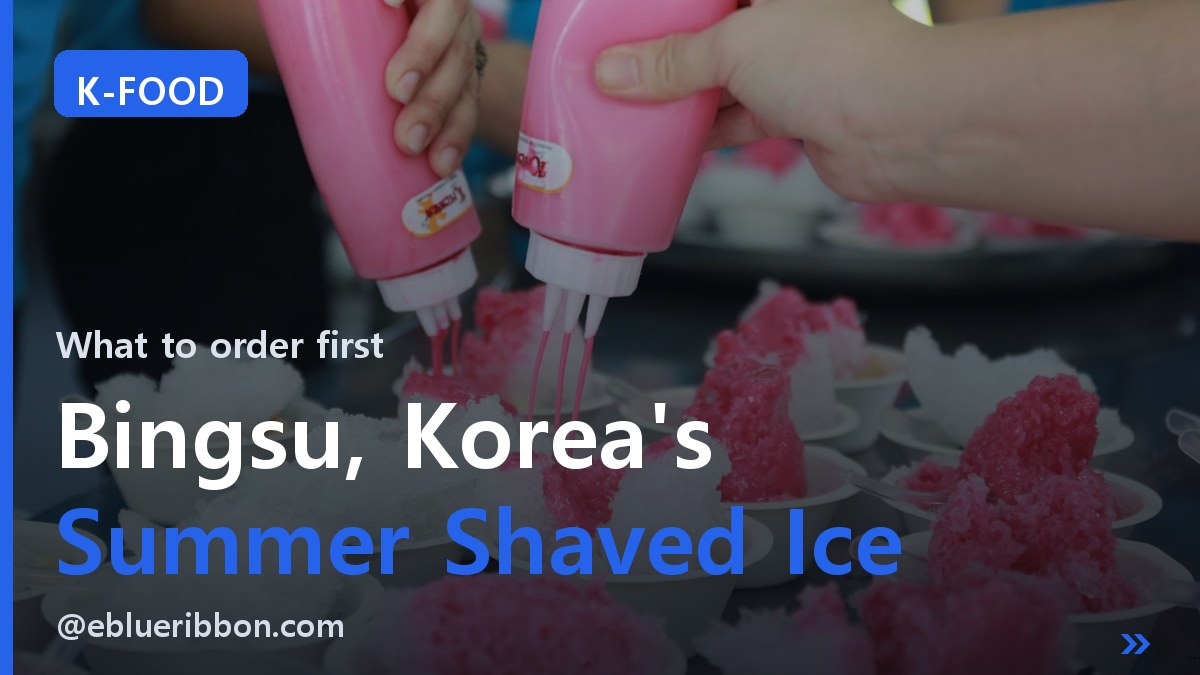
Every August, Korean social feeds fill up with the same image: a mountain of impossibly fine ice, usually buried under mango or covered in roasted soybean powder, photographed from above a split second before someone digs in. That mountain is bingsu, and if you visit Korea in summer, you will see it everywhere, from department store cafes to tiny neighborhood shops.
This guide covers what bingsu actually is, why it looks different from the shaved ice you may know, the main types worth trying, and how to order it without the small surprises that catch first-timers.
What bingsu is, and what makes it different
Bingsu is Korean shaved ice served with toppings. That description is technically correct and completely misses the point, because the defining feature is the texture of the ice itself. Classic shaved ice in most countries is crunchy: small hard flakes that melt into syrup. Modern Korean bingsu is built on what Koreans call snowflake ice, made by freezing milk (or a milk blend) and shaving it into powder-fine layers. It does not crunch. It dissolves, closer to fresh snow than to crushed ice, and it carries a mild milky sweetness before any topping is added.
That texture is why bingsu spread so well on video. The moment a spoon presses into the ice and the whole structure slowly gives way is exactly the kind of satisfying physical detail that short-form video rewards. If you have watched Korean dessert videos, you have almost certainly seen it already.
From red beans to mango mountains
Bingsu did not start as a photogenic dessert. The classic version, patbingsu, is shaved ice topped with sweetened red beans, chewy rice cake pieces, and sometimes a scoop of ice cream. For decades this was the default summer treat at bakeries and snack shops, and many Koreans still consider it the true form.
The modern wave arrived when cafes began competing on ice texture and premium toppings. Milk-based snowflake ice replaced water ice in most cafes, and toppings expanded from red beans to fresh fruit, injeolmi rice cake with roasted soybean powder, chocolate, coffee, and seasonal specials. Prices climbed with the toppings. A cafe bingsu today is priced and sized as a dessert for two or three people, not one, which is the single most useful thing to know before ordering.
The main types you will see on menus
| Type | What it is | Good first pick if |
|---|---|---|
| Patbingsu | The classic: red beans, rice cake, often ice cream | You want the traditional version |
| Injeolmi bingsu | Roasted soybean powder and chewy rice cake, nutty and mildly sweet | You prefer desserts that are not very sugary |
| Mango bingsu | Snowflake milk ice piled with fresh mango, the summer bestseller | You want the famous photogenic one |
| Melon bingsu | Served inside half a melon, ice and fruit together | You are sharing and want the table centerpiece |
| Coffee or chocolate bingsu | Espresso, cocoa, or cookie toppings on milk ice | You are already a dessert cafe regular |
Menus change seasonally, and many cafes run limited editions through July and August. If a shop has a handwritten seasonal board, that is usually where the interesting options are.
How to order without surprises
A few practical notes that make the first bingsu experience smoother.
- It is a sharing dish. Most cafe bingsu is sized for two or more. Ordering one bowl per person is a common first-timer move, and the staff will usually gently warn you.
- It arrives fast and melts fast. Snowflake ice starts collapsing within minutes. Take the photo quickly, then eat from the top down.
- Mix, or do not. With patbingsu, many Koreans stir everything together before eating. With delicate snowflake bingsu, most people eat layer by layer instead. Neither is wrong.
- Condensed milk is often served on the side. Taste the ice first. Milk ice is already sweet, and the extra pour is optional.
- Expect dessert cafe prices. Premium fruit bingsu at a nice cafe costs about as much as a full meal. The neighborhood bakery version is much cheaper and often just as satisfying.
Where bingsu fits in a Korea food itinerary
Bingsu works best as an afternoon break rather than an after-dinner dessert, partly because of the size and partly because Korean cafes are built for lingering. If you are planning a summer food day, a realistic rhythm is street food or a proper meal first, then a long cafe stop with one shared bingsu. For the first part of that plan, our Korean street food guide covers what to try and how ordering works at stalls, and if you are curious why Korean cafes are designed for staying rather than grabbing and going, we wrote about that in Korean cafe culture explained.
Convenience stores also sell simplified cup bingsu in summer. It is not the same experience, but as a late-night option it is worth knowing about, and our convenience store food guide explains how to navigate those freezers.
Frequently asked questions
Is bingsu only available in summer?
Peak season is June through August, and some smaller shops drop it from the menu in winter. Larger dessert cafes increasingly serve it year round, with seasonal toppings rotating instead.
Is it very sweet?
It depends on the type. Fruit and chocolate versions are firmly sweet. Injeolmi bingsu is the usual recommendation for people who find most desserts too sugary, since roasted soybean powder is nutty rather than sweet.
Can I find it outside Korea?
Korean dessert cafes in major cities worldwide often carry bingsu, and Korean franchise chains have exported it across Asia. The snowflake ice texture is the thing to check for, since some shops abroad serve coarser ice under the same name.
If you want to see the texture before you ever order one, a quick search for bingsu videos on YouTube shows exactly why this dessert became a summer icon.
#bingsu #koreanshavedice #koreandessert #patbingsu #koreanfood #summerinkorea #kculture
You Might Also Like
- Korean Fried Chicken Explained: Why It’s Different and What to Order
- Korean Skincare Routines Explained: What the 10 Steps Actually Do
- Korean Street Food: What to Try First and How to Order
Want these in your inbox? Subscribe below and every new post lands there first.
Leave a Reply