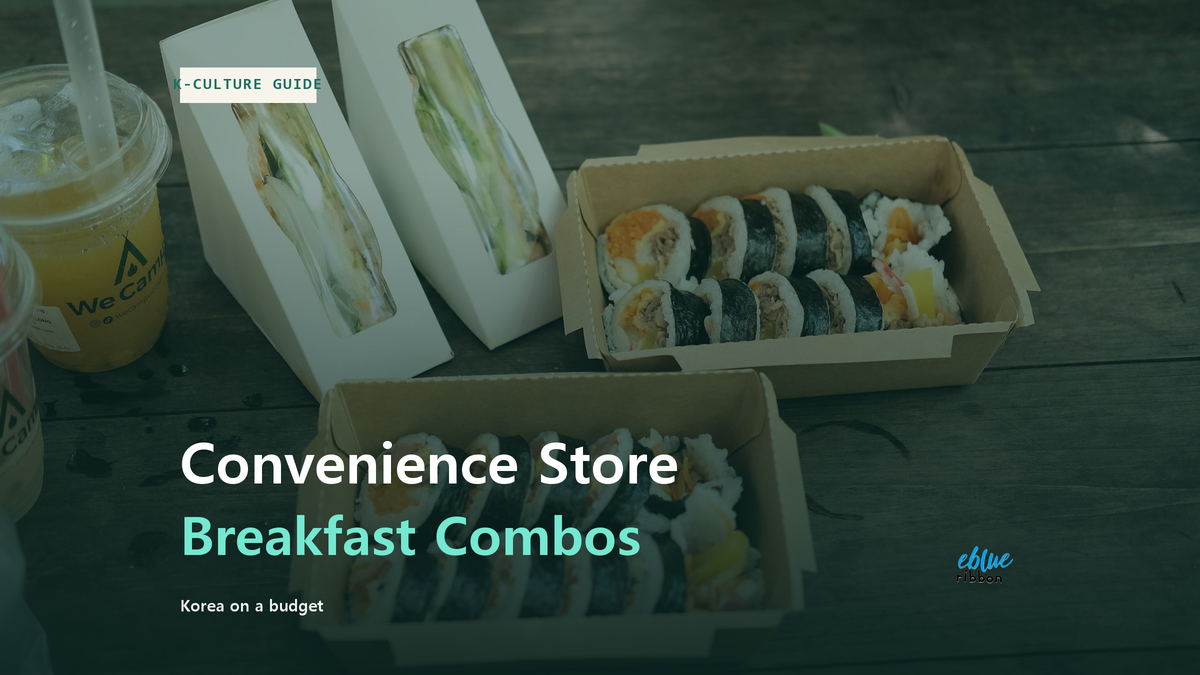
Why breakfast in Korea is harder than it looks

I remember the first time I stumbled into a Korean convenience store at six in the morning, bleary-eyed and jet-lagged. My stomach was rumbling, and I was hoping for a hearty breakfast. To my surprise, most restaurants were still asleep and cafes only offered pastries. It seemed like my only option was the brightly lit convenience store on the corner, which seemed inviting enough. But my first mistake? Treating it like a snack stop. I grabbed a random collection of trendy items and was left unsatisfied, realizing too late that my cold porridge needed heating. With a bit more experience, I’ve come to see these stores not just as snack havens, but as mini-cafeterias complete with microwaves, hot water dispensers, and cozy counters where one can put together a satisfying meal.
The three-slot rule

Navigating a Korean convenience store for breakfast requires a strategy, which I’ve dubbed the “three-slot rule”. Essentially, you need to fill three basic needs: base (like rice, bread, or porridge), protein (think eggs, cheese, or soy milk), and a drink (water, tea, or coffee). This order mirrors the layout inside the store — chilled base items near the front, protein-packed dairy items right beside them, and beverages lining the back wall. In my experience, the prices vary slightly between branches, but if you rely on the price tags rather than hearsay, you’ll navigate these aisles with ease.
Five combinations, priced
| Combo | Items (Korean on the label) | Typical total | Prep | Best for |
|---|---|---|---|---|
| 1. The dependable one | Triangle kimbap 삼각김밥 (₩1,300–1,800) + 2 boiled eggs 삶은 계란 (₩2,000–2,500) + water 생수 (₩1,000) | ₩4,500–5,500 | None, all cold | Early KTX, long sightseeing day |
| 2. The warm one | Cup porridge 죽 (₩3,500–4,500) + banana 바나나 (₩1,000–1,500) + barley tea 보리차 (₩1,200) | ₩5,500–7,000 | Microwave 2 min | Upset stomach, cold morning |
| 3. The light one | Greek yogurt 그릭요거트 (₩2,500–3,500) + mixed nuts 견과류 small pack (₩1,500–2,000) + canned coffee 캔커피 (₩1,500–2,000) | ₩5,500–7,500 | None | Eating at the hotel desk |
| 4. The sandwich one | Egg sandwich 샌드위치 (₩2,500–3,500) + soy milk 두유 (₩1,200–1,500) | ₩3,700–5,000 | None | Grab and go on the subway |
| 5. The home-style one | Roasted sweet potato 군고구마 (₩2,000–3,000, autumn–spring) + string cheese 스트링치즈 (₩1,200–1,500) + hot tea from the warmer (₩1,500) | ₩4,700–6,000 | Sold warm from the case | October to April mornings |
Step by step at the store

- Read the sticker first. My first few visits, I overlooked the magic of 1+1 deals. A yellow or red tag signals a bargain, like buy one get one free. This is gold if you’re craving multiple yogurts. Two 1+1 yogurts for ₩3,000 easily beat one at ₩2,800.
- Check how it is eaten. Be mindful of preparation needs. If you see a microwave icon with 700W 1분30초, that cup of porridge needs heating. I learned this the hard way, biting into a cold dosirak once. Kimbap and sandwiches are grab-and-go, though.
- Pay. Simply place your items on the counter. Thankfully, you don’t need cash; foreign Visa and Mastercard are widely accepted. Need a bag? Mention 봉투 주세요 (bongtu juseyo), though they’ll cost a modest ₩100–200.
- Heat it yourself. The microwave is typically near the counter or seating area. Once, I hesitated, unsure if the staff would assist. They won’t, but a nod will guide you. Follow the instructions on the packaging for best results.
- Eat at the counter and sort the trash. Korean convenience stores take recycling seriously. Separate your trash into general (일반), plastic (플라스틱), and cans. This was new to me, but it quickly became second nature.
Opening a triangle kimbap without tearing it

Opening a triangle kimbap was initially a challenge. Here’s the trick: the wrapper is numbered for a reason. Pull tab ① straight down the middle, then pull ② and ③ away from the sides. It’s designed to keep the seaweed separate and crisp. Once, I tore it from the wrong angle and ended up with a mess — rice everywhere. Fillings are usually labeled, with options like 참치마요 (tuna mayo), 전주비빔 (spicy mixed), 불고기 (beef), and 김치 (kimchi).
Mistakes that push the bill past ₩10,000
- Two drinks. I’ve been guilty of picking both a bottled latte and water, skyrocketing costs before even touching food. Pick one, and refill a water bottle elsewhere.
- Premium sandwiches. Tempting as they are, the ₩4,500–5,500 club sandwiches transform a ₩4,000 breakfast into an expensive affair.
- Sweetened everything. It’s easy to grab a sweetened bottled coffee or yogurt by default. Look for 무가당 (mugadang, unsweetened) or 저당 (jeodang, low sugar) to avoid a sugar rush.
- Buying the viral item as the meal. Those viral character desserts? I got one once; delightful but not breakfast-worthy.
- Using the store app for discounts. I once tried downloading a store app, only to realize it needed a Korean number and bank. Trust the shelf stickers for those 1+1 deals instead.
Label words worth recognising

- 삼각김밥 (samgak gimbap) — triangle kimbap
- 삶은 계란 (salmeun gyeran) — boiled eggs; 구운 계란 (guun gyeran) are the brown smoked ones
- 죽 (juk) — porridge; 전복죽 (jeonbok juk) is abalone, 야채죽 (yachae juk) vegetable, 닭죽 (dak juk) chicken
- 두유 (duyu) — soy milk; 무가당 (mugadang) — unsweetened
- 전자레인지 (jeonja reinji) — microwave; 뜨거운 물 (tteugeoun mul) — hot water
- 봉투 주세요 (bongtu juseyo) — a bag, please
Common questions
Q. Are the stores really open at 6 a.m.?
Yes, nearly all CU, GS25, 7-Eleven, and emart24 locations operate 24/7 in urban areas, including holidays. Some inside office buildings do shut overnight, but the door sticker will clearly say 24시 if they’re round the clock.
Q. Can I eat inside?
Yes, if there’s a counter with stools, usually by the window. If seating isn’t available, it’s best to step outside rather than dine in the aisle. The microwave and hot water stations are customer perks regardless.
Q. Is there anything for a vegetarian?
Options include boiled eggs, yogurt, nuts, fruit cups, sweet potatoes, plain rice balls (just check for 참치 tuna or 햄 ham), and vegetable porridge. Most sandwiches contain meat or egg, but the 야채 (yachae, vegetable) sandwich might be a safe bet.
Related reads

- Korean Convenience Store Food: What to Try First — the hot water station and the combos locals eat after dark.
- Korean Convenience Store Snacks to Try — for the non-breakfast shelf.
- T-money Card Seoul: One Card, Several Silent Limits — the same card pays at the register.
Prices are typical CU and GS25 shelf tags in Seoul, checked August 2026; promotions change monthly, so the sticker on the shelf is the final word.
Leave a Reply